What we do on the job, and why it matters to you
| What happens |
What it means for you |
| The work area gets sealed in plastic and put under negative pressure before anything is disturbed |
Spores stay in the room we’re working in, not in the bedrooms down the hall |
| Wet drywall, insulation, carpet pad, and trim come out; studs, joists, and slab get cleaned in place |
You lose what can’t be saved and keep the structure that can |
| Removed material is bagged inside the containment before it leaves the house |
Nobody carries open moldy debris past the kitchen |
| Everything that stays is HEPA-vacuumed and wiped down, then dried, before the wall closes |
New drywall doesn’t go up over the same problem |
| We find where the water came from and tell you what has to change for the removal to hold |
A removal with the moisture still running is a repeat job, and neither of us wants that |
| You get a written report of what came out, from where, and why |
Louisiana law requires it, and a buyer, tenant, or adjuster will ask for it |
What Got Wet?
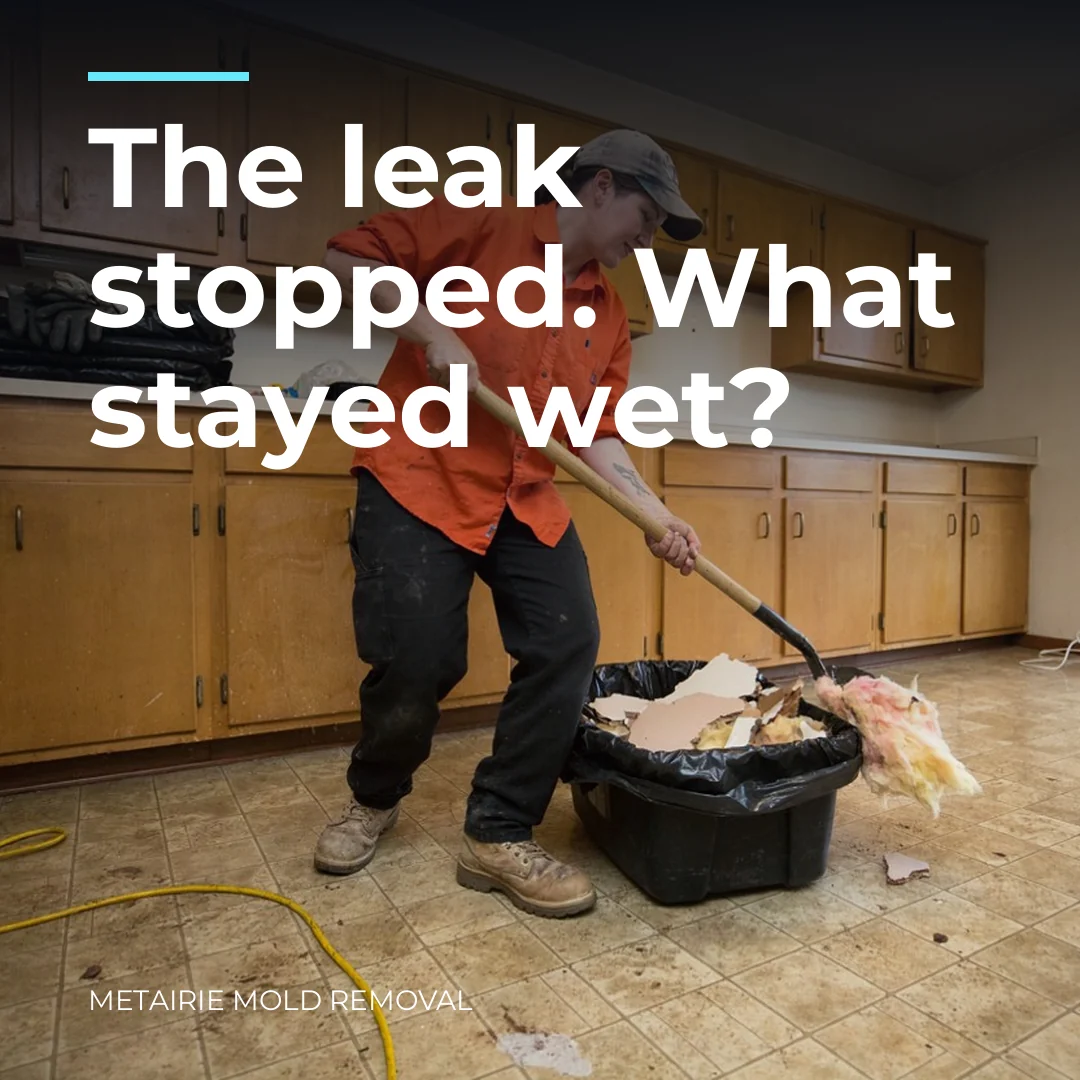
The leak stopped. What stayed wet? That is the question we ask on almost every call, because the water event and the mold are rarely in the same place. A supply line under the kitchen sink wets the cabinet floor and the wall behind it. A roof leak over the hallway soaks the insulation in the attic and shows up as a stain on a bedroom ceiling. A backed-up AC drain runs along the closet floor and into the carpet pad in the next room.
Knowing when the water event happened makes the next conversation much easier. It tells us how long the material has been wet, whether an insurance claim might still be in play, and how far to open the wall. If it was a sudden event, photograph the source, the wet area, and anything you had to throw out before it gets hauled off.
Why Metairie Has Its Own Kind Of Mold Problem
Most of Metairie sits below sea level, behind the lake levee, and stays dry because Jefferson Parish pumps rainwater out through the canals. The ground under a slab is wet ground. The houses on top of it are mostly ranches from the 1950s, 60s, and 70s — Bonnabel, the streets off Veterans and West Esplanade, the subdivisions toward Kenner — built on slabs with original bathroom plumbing and attic air handlers. Old Metairie sits a little higher on the ridge and has older raised houses with crawl spaces. Across the river in Gretna, Marrero, Harvey, and Terrytown the story repeats: slab ranches on drained land, a canal at the end of the block.
Then there is August 2005. When the 17th Street Canal wall failed, water moved into the east side of Metairie — Bucktown, the low streets of Old Metairie, the blocks near the canal. CDC found visible mold in 45 percent of the New Orleans-area homes it looked at afterward. Twenty years on, most of those houses were gutted and rebuilt properly. Some were dried “enough” and closed up. The flood is over. The mold may not be.
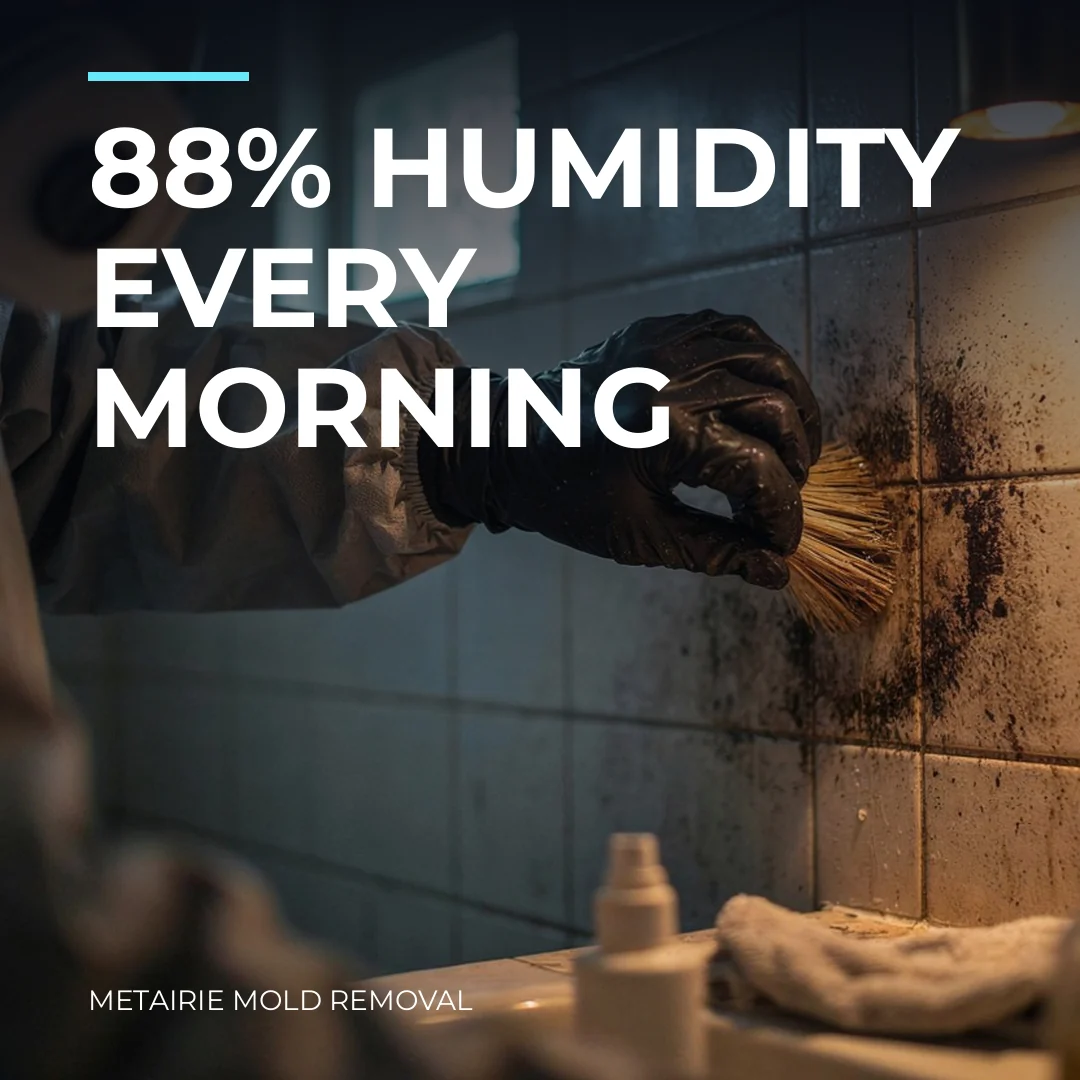
You don’t need a disaster to act. The morning humidity here averages 88 percent, and one plumbing leak in a house that never took a drop of Katrina water is plenty.
Why It Came Back
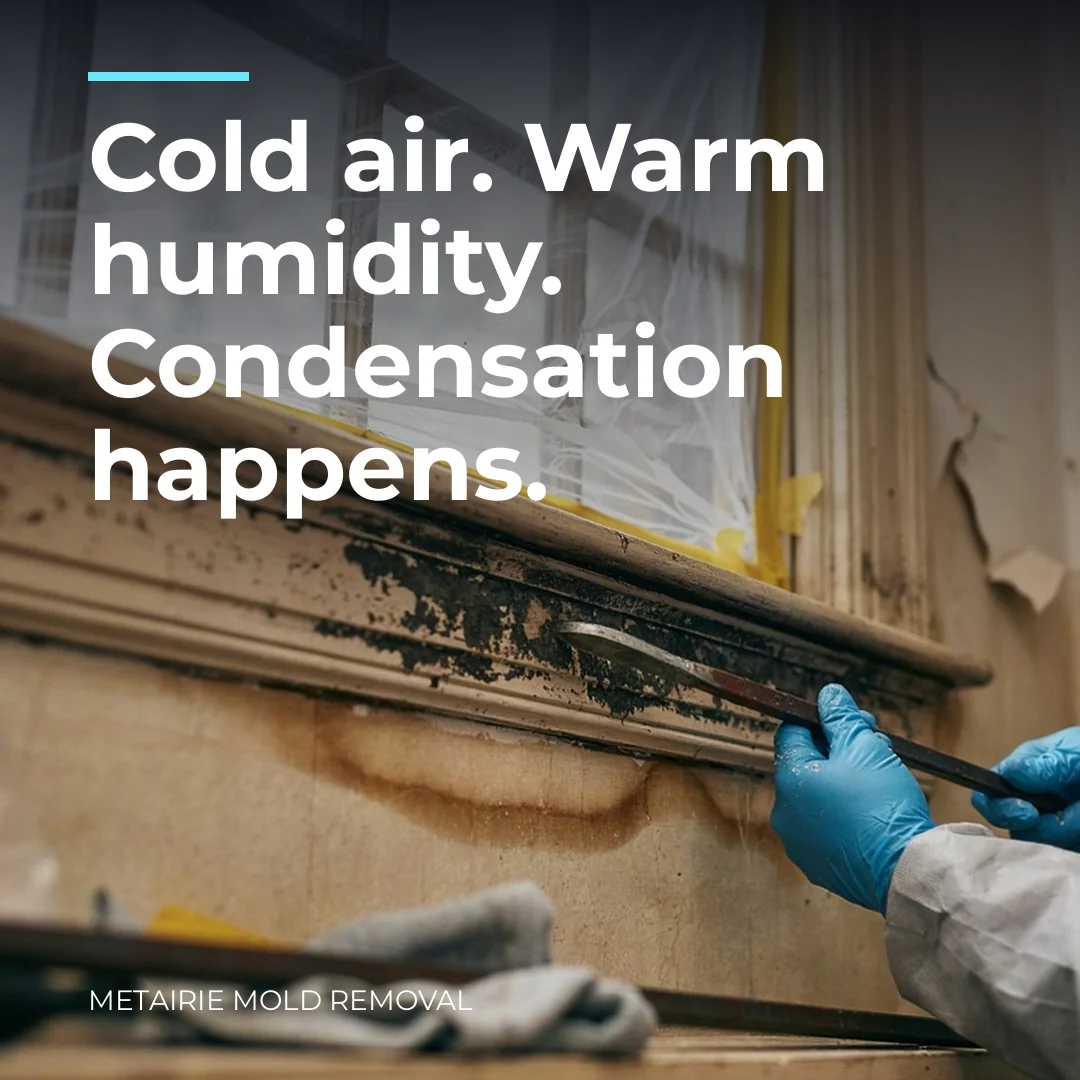
Musty again? Don’t keep ignoring it. When a spot returns after a weekend with a sponge and a bottle of bleach, it is telling you two things: the growth was inside the material, not on it, and the moisture is still there. EPA doesn’t recommend bleach as a routine mold practice and says not to paint or caulk over mold. Killing mold isn’t the same as removing it — dead growth still causes allergic reactions, which is why the objective is source removal rather than covering or deodorizing it.
If the smell comes and goes with the cooling system, the growth may be in the system rather than the room. EPA says not to run an air handler you suspect is contaminated, because it can spread mold through the house, and that insulated duct that has gotten wet or moldy gets replaced rather than cleaned. HVAC and duct mold remediation covers what that job looks like.
Dealing With A Rental?
Jefferson Parish has a lot of rental housing, from Fat City condos to duplexes in Kenner and Terrytown. Louisiana landlords carry a warranty against defects in the property whether or not they knew about the problem, and tenants can’t withhold rent for unmade repairs. The quickest path for both sides is removal with a written record. Landlords: the report is your documentation. Tenants: say so when you call — it changes how we write it up.
Selling In Jefferson Parish?
The Louisiana Real Estate Commission’s property disclosure form asks sellers directly about mold, mildew, water intrusion, and flooding. In Metairie that question carries weight, because buyers here already ask about 2005. A known problem left off the form can come back as a rescission or damages claim after closing. A problem that was removed and written up is one line on the form and one document in the folder. Get it out and get it documented before the listing goes up.
The Next Step Is A Phone Call
We pick up at any hour. Tell us where you see it or smell it, what got wet, and when the water started. Reach us and you’re connected right away; catch us on a job and you’ll get a scheduled callback from a number you’ll recognize.
We take calls from Metairie, Kenner, Harahan, River Ridge, Elmwood, Old Metairie, Bucktown, Jefferson, and across the river from Gretna, Marrero, Harvey, Westwego, Terrytown, Waggaman, and Estelle. The areas page has the complete list.
See growth on drywall, ceilings, or trim? Call.