Mold Removal in Metairie, LA
You found it. On a ceiling, low on a wall, in the back of a cabinet, around a vent. Now the job is to keep it from getting bigger and get it out. The sooner you find it, the smaller the fight — and in a house where the AC runs three seasons out of four and the ground under the slab never dries, small doesn’t stay small for long. Call and walk us through what you found.
What we do first
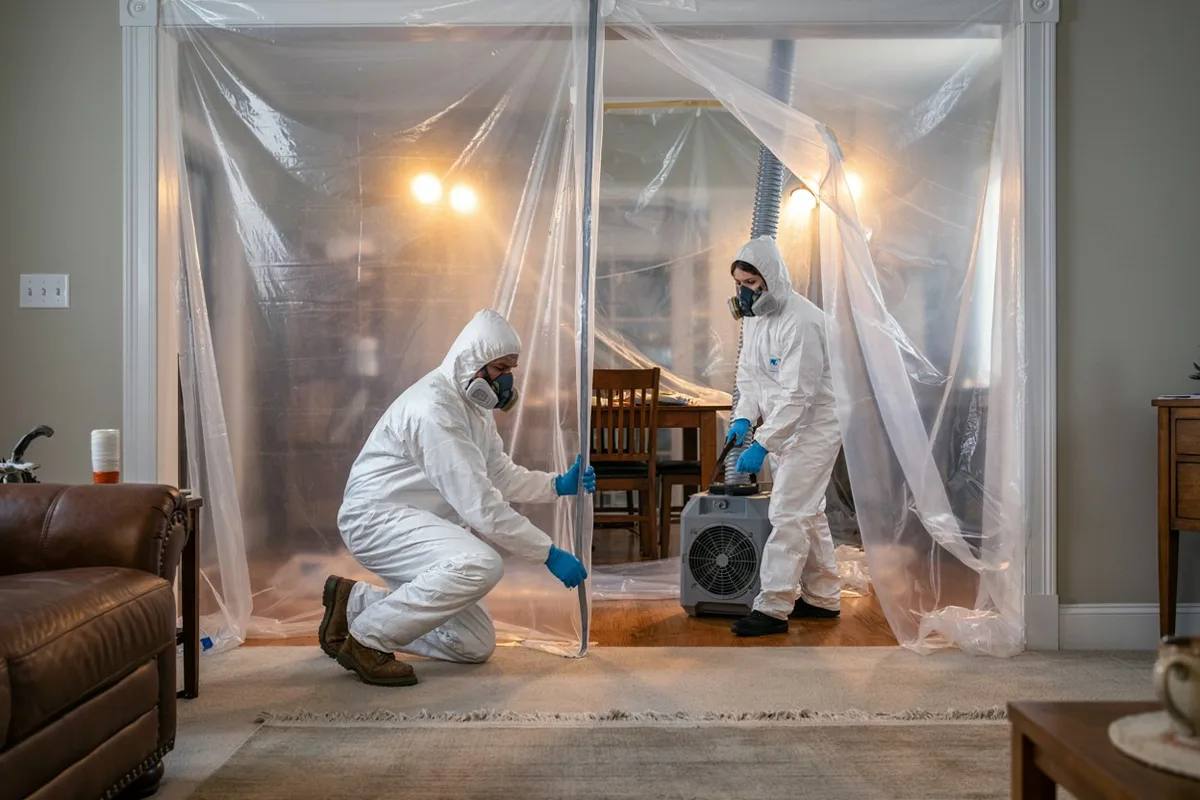
Contain it. Before anything gets pulled, the work area is sealed in plastic and put under negative pressure so spores stay in the room we are working in. Then the wet, moldy porous material — drywall, insulation, carpet pad, ceiling tile, trim — comes out and is bagged inside the containment. Studs, joists, masonry, and slab get cleaned in place, HEPA-vacuumed, and left to dry. Nothing closes back up until the wood is dry enough, and LSU AgCenter puts that at under 20 percent moisture.
What has to happen for the removal to last
- The water has to be stopped first — EPA and Louisiana’s Department of Health both say to fix the moisture before cleaning up the mold.
- Porous materials that were wet and moldy come out; scrubbing them changes the color and leaves the growth.
- Carpet, padding, and insulation hold water in a way a hard surface doesn’t, so they are rarely worth saving.
- Children should not take part in mold cleanup, and the containment is what keeps the rest of the house out of it.
Tell Us What You Found, 24/7
The moisture has to stop
Mold is a moisture problem with a fungus on top. A removal done while the supply line is still weeping or the duct is still sweating is a removal that gets repeated. We find where the water is coming from, tell you plainly what has to change, and talk it through on the call. What we don’t do is close a wall over a wet cavity because it looks clean.
Metairie notes
Most calls here come from slab ranches built between the early 1950s and the late 1970s — Bonnabel, the streets between Veterans and West Esplanade, Terrytown, Marrero — with original bathroom plumbing, an attic or closet air handler, and flex duct that has sweated through forty summers. The next biggest group is Old Metairie and Harahan, where the houses are raised and the water goes down instead of out. And on the east side there are still houses that took 17th Street Canal water in 2005 and were closed up faster than they should have been. Tell us the neighborhood and the age of the house when you call.
What you get when it’s done
A written report of what came out, where it came from, and why. Louisiana law requires a mold remediator to give you one, and it is what a buyer, a tenant, or an insurance adjuster will want to see. Keep it with the house.